
RSS Discussion Paper
Published:
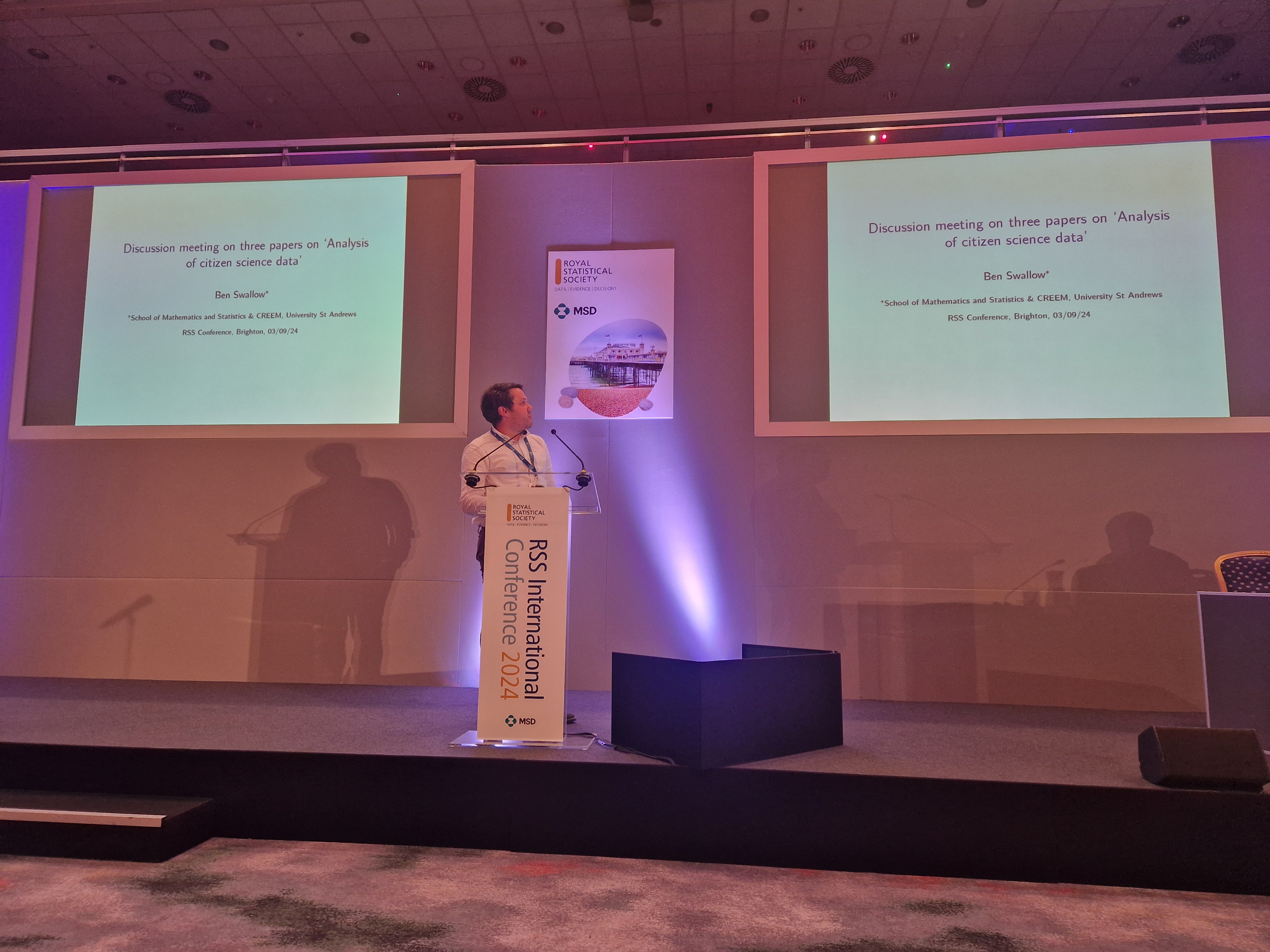
Our paper was discussed at the 2024 RSS Conference in Brighton as part of the multi-paper discussion meeting Analysis of Citizen Science Data.
The meeting was chaired by the president of the RSS, Dr. Andrew Garrett.
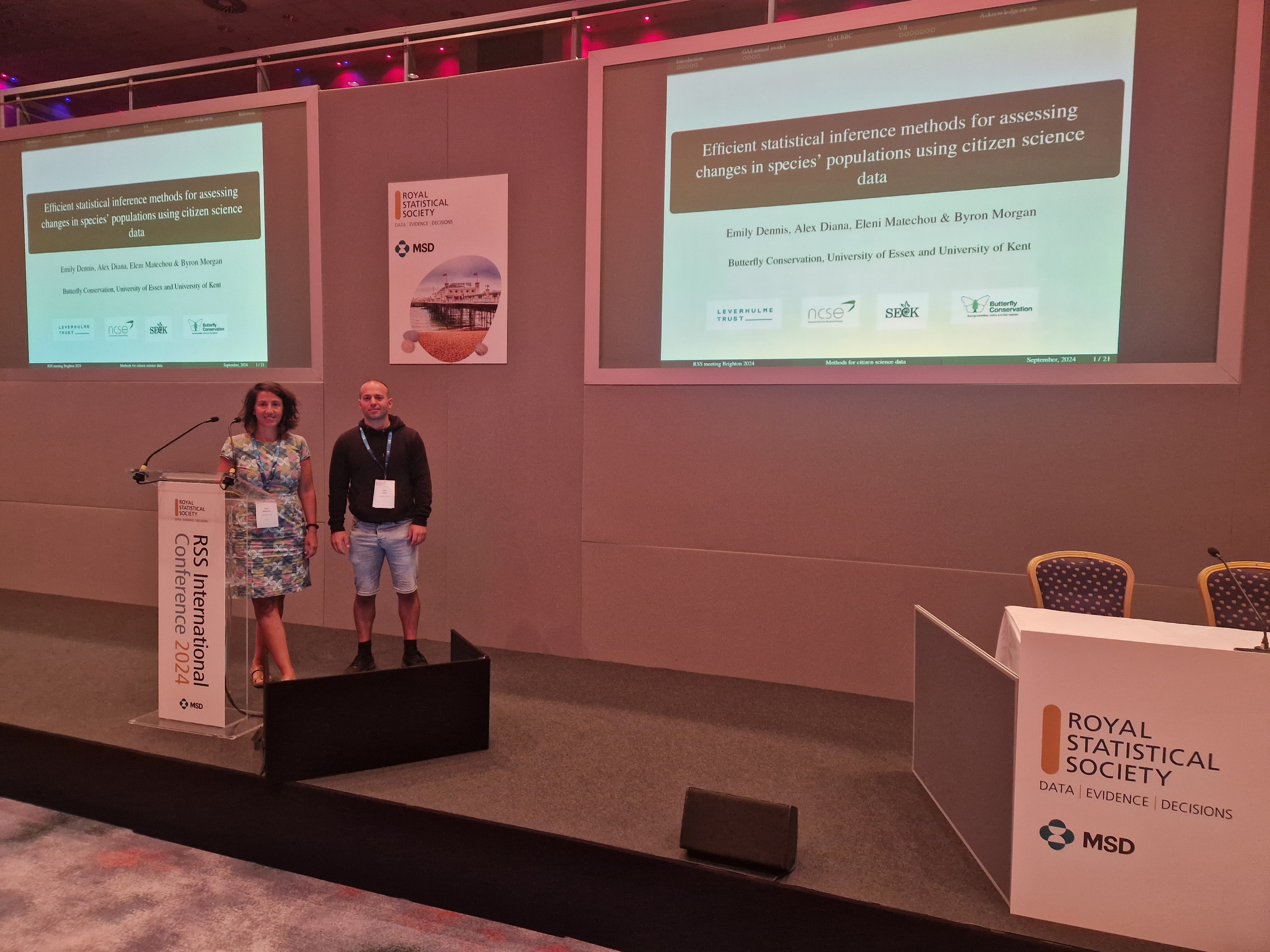
Alex and Eleni presented the paper, which was discussed by Dr. Ben Swallow (University of St Andrews) and Professor Kerrie Mengersen (University of Queensland).

Paper Details
Paper 1: Efficient Statistical Inference Methods for Assessing Changes in Species
Authors: Emily B Dennis1,2, Alex Diana3, Eleni Matechou2, Byron J T Morgan2
1Butterfly Conservation, 2University of Kent, 3University of Essex
Download the preprint (PDF)
Supplementary Materials
Abstract
The global decline of biodiversity, driven by habitat degradation and climate breakdown, is a significant concern. Accurate measures of change are crucial to provide reliable evidence of species’ population changes. Meanwhile, citizen science data have witnessed a remarkable expansion in both quantity and sources and serve as the foundation for assessing species’ status. The growing data reservoir presents opportunities for novel and improved inference but often comes with computational costs: computational efficiency is paramount, especially as regular analysis updates are necessary.
Building upon recent research, we present illustrations of computationally efficient methods for fitting new models, applied to three major citizen science data sets for butterflies. We extend a method for modelling abundance changes of seasonal organisms, firstly to accommodate multiple years of count data efficiently, and secondly for application to counts from a snapshot mass-participation survey. We also present a variational inference approach for fitting occupancy models efficiently to opportunistic citizen science data.
The continuous growth of citizen science data offers unprecedented opportunities to enhance our understanding of how species respond to anthropogenic pressures. Efficient techniques in fitting new models are vital for accurately assessing species’ status, supporting policy-making, setting measurable targets, and enabling effective conservation efforts.
Speakers, organisers, and discussants enjoyed dinner and interesting conversation at a nearby restaurant.

The session was recorded and is available on the RSS YouTube Channel (Discussion Meetings).
Authors’ Reply to the Discussion
Following the discussion of our paper, we provided a detailed response addressing the points raised. In our reply, we emphasized the importance of developing efficient, flexible methods for analyzing citizen science data, particularly when such records typically contain minimal covariate information.
Our response was published in the same journal issue: Authors’ Reply to the Discussion.